

Can you get married on the Beach In Cornwall? Guide for couples

Can you get married on the Beach in Cornwall?
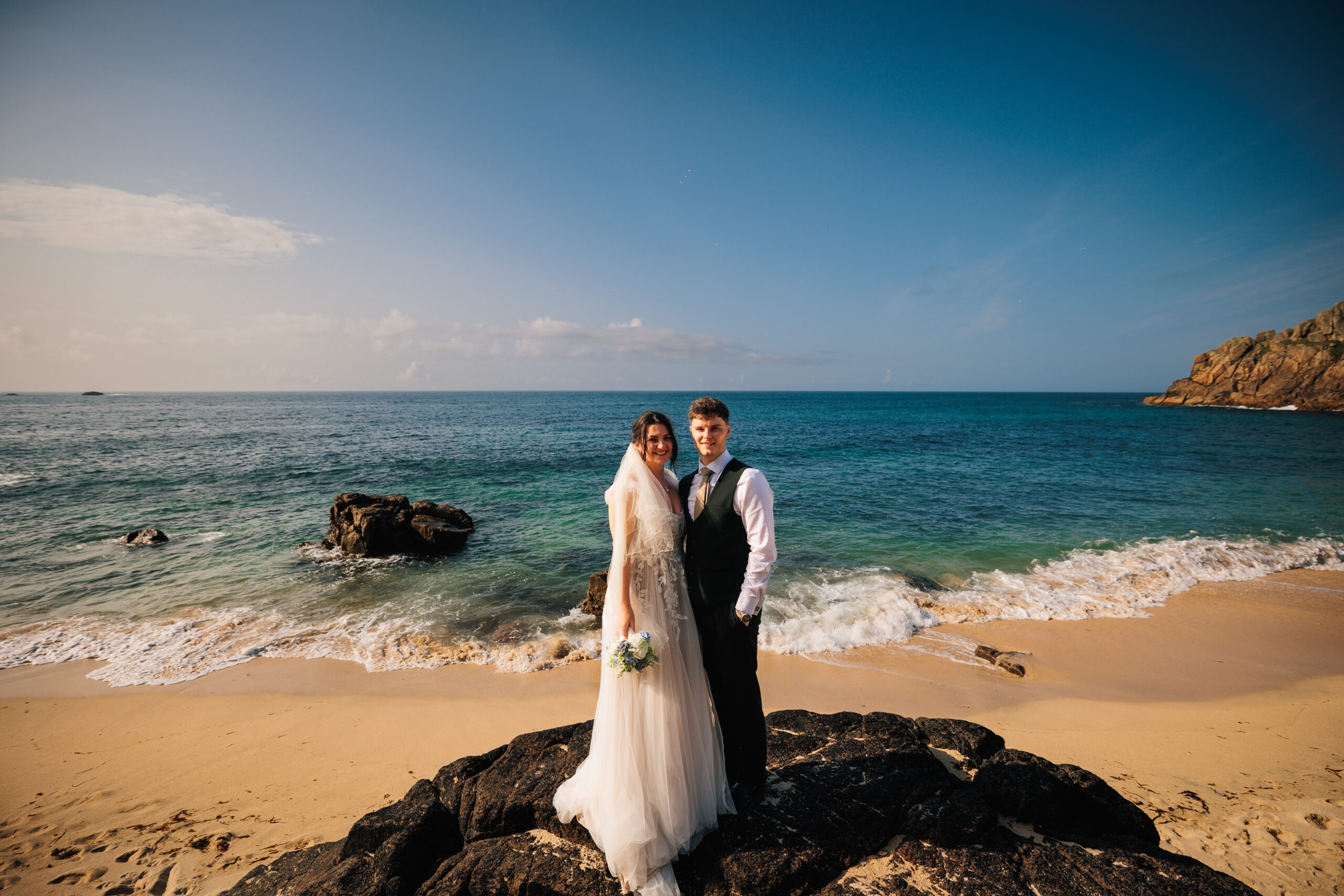
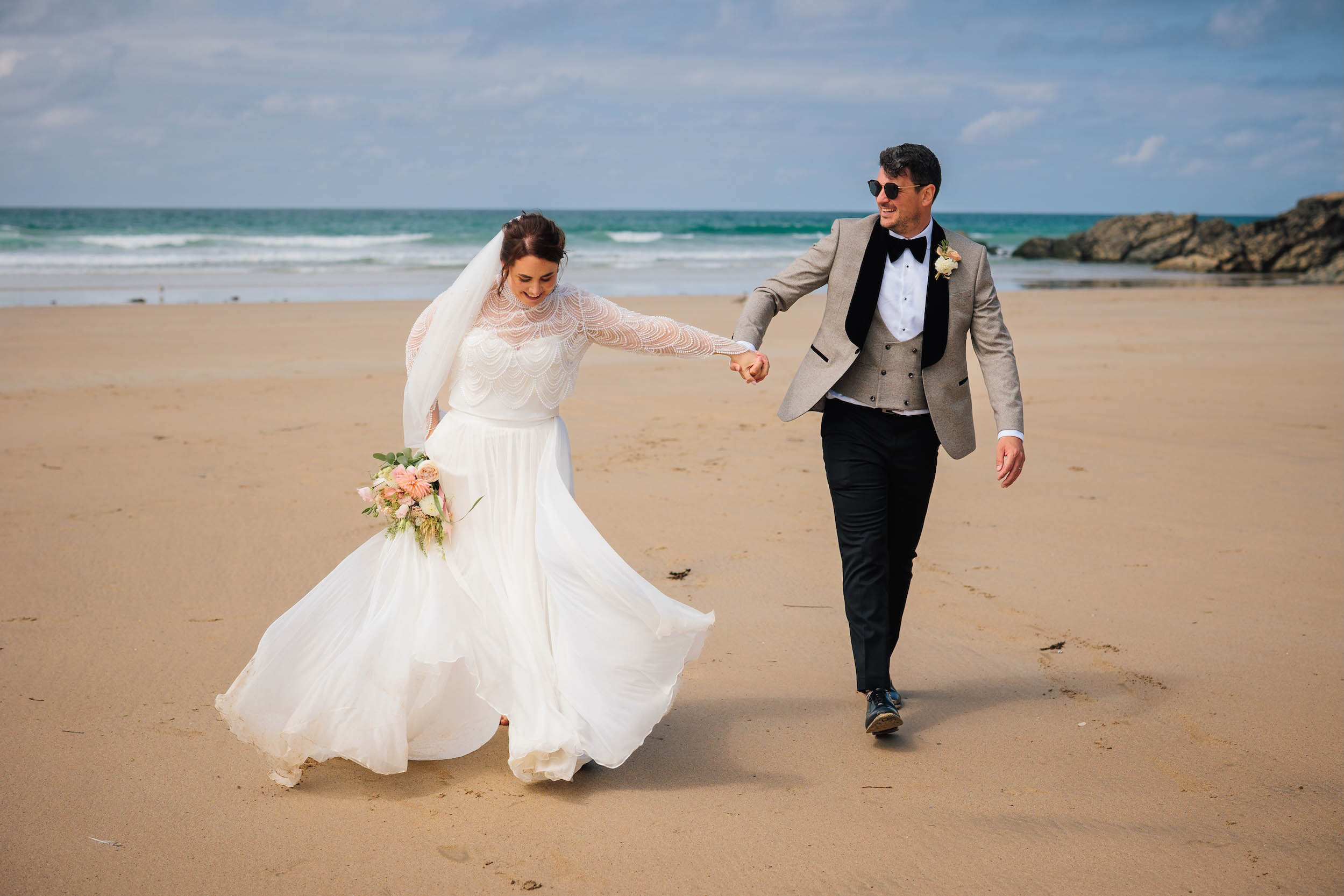
A Beach Wedding in Cornwall is a dream for many couples. Imagine exchanging vows with your partner, sand in-between your toes as you listen to the comforting sounds of the ocean around you, dramatic cliffs in the background and the warmth of the sun on your face. Cornwall has the most spectacular coastline and is one of the most popular destination wedding locations in the UK. its no surprise that many couples often ask:
“Can you get married on the Beach in Cornwall?”
The short answer is Yes! – You can but with some important Legal details to understand before you get swept up in the excitement of planning your Cornwall Wedding. In this guide, I will explain how Beach Weddings work in Cornwall (also applies to beach weddings across England and Wales), the legal bits and the best way to plan a relaxed coastal ceremony.
Legally, Can you get married on the Beach in Cornwall?
In England and Wales, a wedding is only legally recognised if it takes place in one of the following locations:
- A licensed wedding venue
- A registry office
- A registered place of worship
Because most beaches are public spaces, they are not licensed for legal marriages. This means you cannot legally marry on most beaches in Cornwall with a registrar. However, there is a very popular way couples achieve the beach wedding experience.
The only venue in Cornwall that is licensed for legally binding wedding ceremonies on the Beach, is Lusty Glaze in Newquay. I believe it is actually the only venue in the UK where you can get married legally on the beach. Here is a Lusty Glaze Beach Wedding I Captured in July 2025.
The most common way to have a Beach Wedding in Cornwall
Many couples choose a two-part wedding approach.
Step 1: Complete the Legal Marriage
The legal ceremony takes place at either:
- A Cornwall registry office
- Your local Registry Office
- You get the legal process completed in your home country
This part is usually very simple and often takes less than 20 minutes. It can even just be the legal paperwork, with little to no ceremony.
Some couples even do this a few days before their main wedding celebration, so that the legal process is complete, and they are in fact legally married.

Step 2: Have a Celebrant Ceremony on the Beach
Once the legal paperwork is complete (now you are legally married), couples can have a celebrant-led ceremony on the beach.
This allows you to exchange vows in a beautiful coastal setting without legal restrictions.
Celebrant ceremonies can include:
- Personal vows
- Readings from friends or family
- Symbolic rituals such as handfasting
- Exchanging of rings
- A relaxed and informal atmosphere
Because it isn’t legally binding, the ceremony can take place almost anywhere!
It is also worth remembering that because it is not legally binding, anyone can lead you ceremony. So a family member or friend could do it. But there are some amazing celebrants out there who conduct beautifully bespoke ceremonies, having taken the time to get to know you both as a couple. This can mean your friends and family get to relax and be fully present during your ceremony and you know it will be conducted by a professional who knows their craft! I am happy to recommend amazing celebrants – just ask.
Do you need Permission for a Beach Wedding in Cornwall?
Because beaches are public spaces (even private beaches can be Public Spaces, some locations may require permission from:
- Cornwall Council
- The National Trust
- Private landowners
This is particularly important if you plan to include:
- Wedding arches
- Seating
- Decorations
- Large groups of guests
For small, informal ceremonies with a celebrant and a few guests, permission is often straightforward, but it’s always worth checking in advance. This can avoid any issues on the day. For Elopement’s in Cornwall, with just a celebrant and the couple, permission would not normally be required, particularly at sunrise and sunset times, as no one will know you are there!
Tips for Planning a Cornwall Beach Wedding
Beach weddings can be amazing and be a real experience for you and your guests, but they do require some planning.
Check Tide Times – Tidal ranges in Cornwall can be huge at certain times of the year. We get two high tides per day, 12 hours apart. Low tide is around 6 hours after high tide. The tide time changes every day but are predictable and there are tide planners available online and in little books you can buy from most local shops in Cornwall at a meagre cost of £1.80! Strong winds and large swell can also exacerbate high tides, making them even higher. Local knowledge goes a long way.
Plan the time of day for your ceremony – The best light is found at the start and end of the day, that dreamy golden hour light that you get when the sun is low in the sky. Obviously, the time of year will also play a part here. During the spring and autumn, the sun stays lower in the sky throughout the day. The general rule is to try and have your beach ceremony either side of midday. Midday sun is well known for being very harsh and unflattering. The further from midday you go, in bright sunshine, the better the light. Do not underestimate how bright and hot it can be in the middle of the day during the summer months.
Plan for the wind – Cornwall is Windy, most of the time! Some locations are more sheltered than others and this can be factored into your plans. Your hair will get blown around but it will look wild and wicked! It’s all about embracing the weather in Cornwall. For bigger ceremonies, celebrants and musicians may decide to use microphones or wind protection to be heard.
Have a weather back up plan – Or don’t! There is one thing you cannot guarantee and that is the weather. Luckily Cornwall usually has wind which blows bad weather through. Often, showers will pass through as quickly as they arrived and it may be that the ceremony has to wait a little. Easy to achieve for an elopement or tiny ceremony, harder with lots of guests. So it can be worth having an alternative venue or wet weather plan should the forecast be predominately wet and windy on your big day.
Consider your guests – Some beaches involve steep paths and uneven ground, or are just a decent walk on sand to get to the ceremony spot. Older guests, younger guests, those with mobility issues may struggle with some locations in Cornwall. Consider also any availability of public conveniences and their opening times. I find most guests are happy to put up with a short period of mild discomfort knowing it is what you want and it is your day. It just helps them if they are aware beforehand and are able to prepare by bringing suitable footwear for example.
Be respectful of other beach users – Most people who see a wedding ceremony will be great and obliging. For example, moving out of the way for the ceremony if politely asked. But it is worth remembering that Cornwall is hugely popular, especially in the summer months. Beaches can get busy and car parks can be filled by 9 am during school holidays. Crantock Beach for example is an absolute nightmare for access in the summer! If you aren’t parked up first thing, you are unlikely to get a space until the evening. And it goes without saying, but please leave the beach in the same condition (or better) than you found it!
Best time of year for a Beach Wedding in Cornwall
Cornwall is a beautiful wedding location all year round and each season has its good points and more challenging ones. Some seasons work better for outdoor ceremonies.
Spring (April + May) – Most outdoor ceremonies in Cornwall start in April. Spring is quieter than summer and everything is fresh. Flowers are starting to appear and the weather is getting warmer but without being hot. The weather can be changeable (it’s changeable all year) and it is often windy with rain showers.
Summer (June, July + August) – Warmer weather and long daylight hours. if planning a sunrise or sunset ceremony, bear in mind these could be 5am or after 9pm in June! But you will likely have the beach to yourselves and parking will not be an issue at those times. Beaches can be extremely busy during the day times, particularly during school holidays.
Autumn (September + October) – Perhaps the best time of year for Beach ceremonies with warm weather, beautiful autumnal light and less crowds to contend with. And the sea is at its warmest in September for anyone who fancies a dip!
Winter (November to March) – The light in the winter can be spectacular and Cornwall is at its quietest. But Cornwall in Winter can be very wet and windy. It doesn’t generally get too cold but the dampness makes it feel colder than the weather forecast may suggest.
Why Cornwall is Perfect for Beach Weddings
Few places in the UK offer the combination of urged coastline, golden beaches and dramatic Atlantic sunsets that Cornwall does.
Whether you’re planning a secret elopement, an intimate ceremony with family, or a larger coastal celebration, a beach wedding in Cornwall can create an unforgettable experience. With the right planning and a simple legal ceremony to take care of the legal requirements, couples can enjoy a truly personal and unique experience.
Final Thoughts – You can get married on a beach in Cornwall!
While all but one beaches in Cornwall aren’t licensed for legal beach weddings, it is still possible to create the perfect beach ceremony by taking the two step approach detailed above.
This is an increasingly popular method used by couples who want to have a beach wedding on their terms. I would always recommend speaking to your celebrant and your photographer to ensure the points above have been taken into account t when planning your beach wedding in Cornwall. For more advice on how to get married in Cornwall, head over to the blog here. And also have a read of my advice on choosing your wedding photographer here.


